Plumbing in 1980s Lake Forest Homes: Copper, Polybutylene and What 40-Year-Old Supply Lines Are Telling You
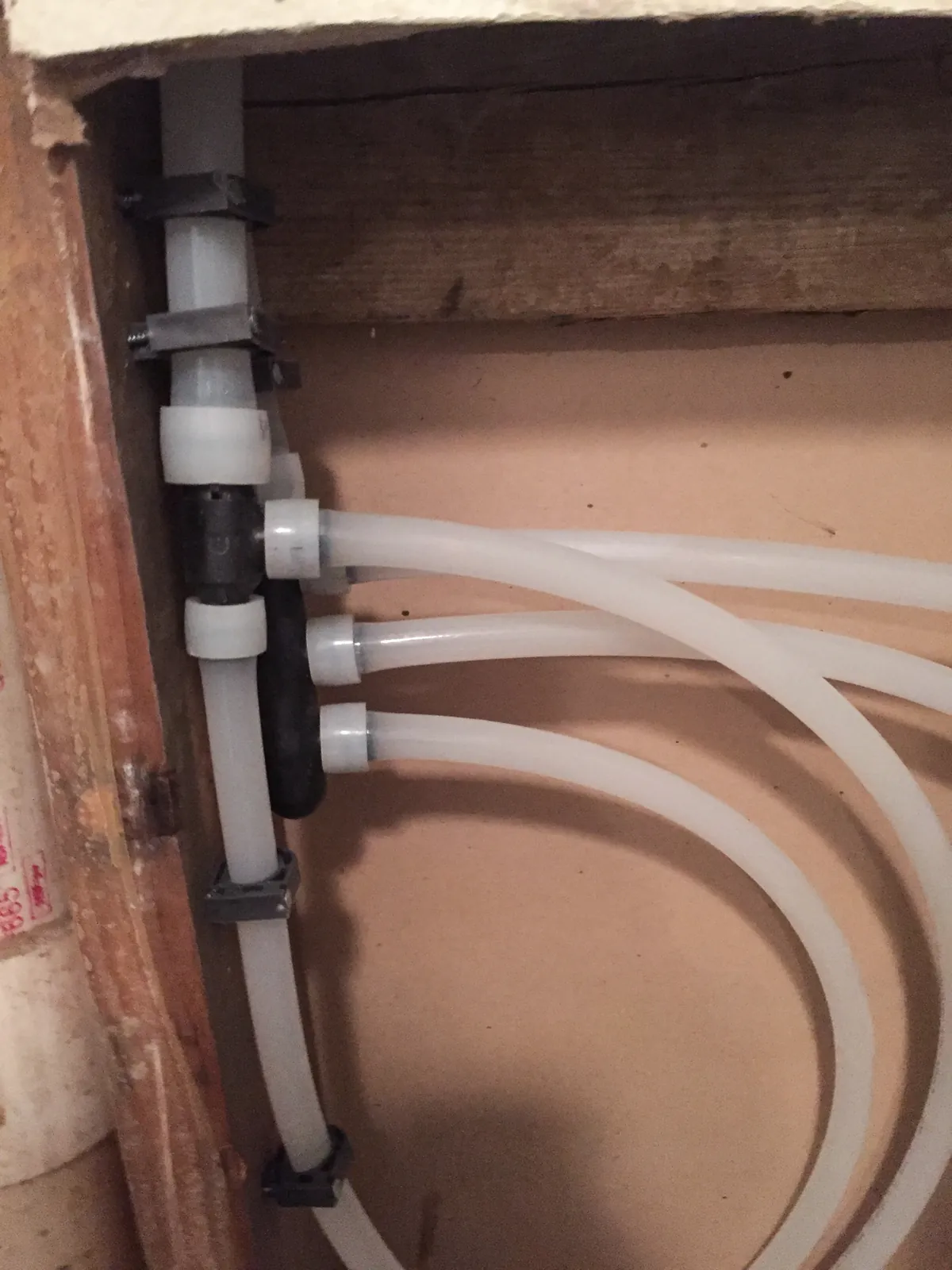
Many Lake Forest homes, from the Lake Forest Keys to neighborhoods along Lake Forest Drive and Ridge Route, were built in the late 1970s and 1980s. What water piping…
Lake Forest grew in waves. The original El Toro tracts came first, then the Lake Forest Keys and the neighborhoods around the two lakes through the 1970s and 1980s, followed by Foothill Ranch and Portola Hills in the 1990s. If your home dates to the 1980s, its supply piping is now roughly 40 years old, and that era had a few quirks worth understanding.
What 1980s supply piping usually is
- Copper remained the most common choice. Much of it was thin-wall Type M copper, and homes built before 1986 may have joints made with lead-containing solder.
- Polybutylene (PB) was widely installed from the late 1970s into the mid-1990s, often as gray flexible pipe. It was popular because it was inexpensive and easy to install.
- CPVC appeared in some homes and additions, usually as cream or tan rigid plastic pipe.
Many homes have a mix, especially if a previous owner remodeled a kitchen or bath.
Why polybutylene deserves special attention
Polybutylene became known for failing without much warning. Chlorine and other disinfectants in treated water can break down the plastic and its fittings from the inside, and failures often show up at fittings or connections. It was the subject of large class-action litigation, and many insurers and home inspectors still flag it today. If your 1980s home has gray or bluish flexible supply pipe stamped "PB2110," it is worth identifying where it runs.
You will often spot polybutylene at the water heater, under sinks or at the main line where it enters the house, although some homes have copper stub-outs that hide plastic inside the walls.
Signs that 40-year-old copper is wearing out
- Pinhole leaks, especially on hot water lines.
- Green or white crust at joints in the garage or under sinks.
- Blue-green stains in sinks and tubs.
- Slowly falling flow, even when pressure at the meter looks normal.
- Noisy or ticking pipes as the hot water runs, which can come from loosened straps as well as the pipes themselves.
Making a plan
A single leak in 40-year-old copper is not always a reason to replace everything, but it is a good moment to take stock. Identify each pipe material in the house, note any past repairs, and keep track of where leaks occur. If you find polybutylene, or if leaks start repeating, comparing whole-house options before the next emergency usually makes the process calmer.
Many Lake Forest neighborhoods have active HOAs with rules about work hours, parking and contractor access, and the City of Lake Forest requires permits for water piping replacement.
Related reading
On this site, see CPVC pipe replacement and common low water pressure causes. Neighbors can visit Irvine, Laguna Hills and Mission Viejo, or browse every city at repipeinc.com.
Not sure what is behind your 1980s walls?
Request a free quote and we can talk through the materials you have and what they may mean. Get my free quote. Our AI system alerts a technician instantly, so you get a fast callback.
Repipe OC, 23821 Hillhurst Drive, Laguna Niguel, CA 92677, (949) 524-2362, CSLB #1087885 C-36.
Repipe OC near you
Not in Lake Forest? The same crew serves nearby cities. See the Repipe OC hub (repipeinc.com), or jump to a neighboring city:
 Written by Repipe OC · CSLB #1087885 C-36 · 23821 Hillhurst Drive, Laguna Niguel, CA 92677 · (949) 524-2362