Are SharkBite Fittings Reliable? When Push-to-Connect Makes Sense in Lake Forest Homes and When It Does Not
Push-to-connect fittings are a handy emergency fix, but are they a good permanent choice inside walls? How they work, where they hold up, where they fail, and what we…
Walk into any home improvement store and you will see push-to-connect fittings, often sold under the SharkBite brand, hanging in the plumbing aisle. They let you join copper, PEX or CPVC without a torch or crimp tool. Lake Forest homeowners often ask us whether they are good enough to leave in place, especially after a weekend repair or a previous owner's handiwork in an older El Toro-era house.
How push-to-connect fittings work
Inside the fitting are a ring of stainless steel teeth that grip the pipe, an O-ring that makes the seal, and a tube support for plastic pipe. You cut the pipe square, deburr it, mark the insertion depth and push it in. The teeth bite, the O-ring seals, and you have a joint in seconds. They are listed for potable water, and many codes accept them when installed to the maker's instructions.
Where they shine
- Emergency repairs, when a pipe bursts and you need water back on tonight.
- Exposed locations where you can see and reach the fitting, such as at a water heater or under a sink.
- Temporary caps during a remodel.
- Transitions between different pipe materials when no other tool is on hand.
Where problems show up
Most failures we see come from installation, not the fitting design itself:
- Pipe not cut square or not deburred, which can nick the O-ring.
- Pipe not pushed to full depth, so only some of the teeth engage.
- Scratched or out-of-round copper that will not seal.
- Fittings buried inside walls or ceilings where a slow weep goes unnoticed.
- Movement or vibration that works the joint over time.
Because the seal depends on a rubber O-ring, long-term performance also depends on water chemistry and temperature. That is one reason many plumbers prefer not to hide them behind drywall.
What we use on repipes
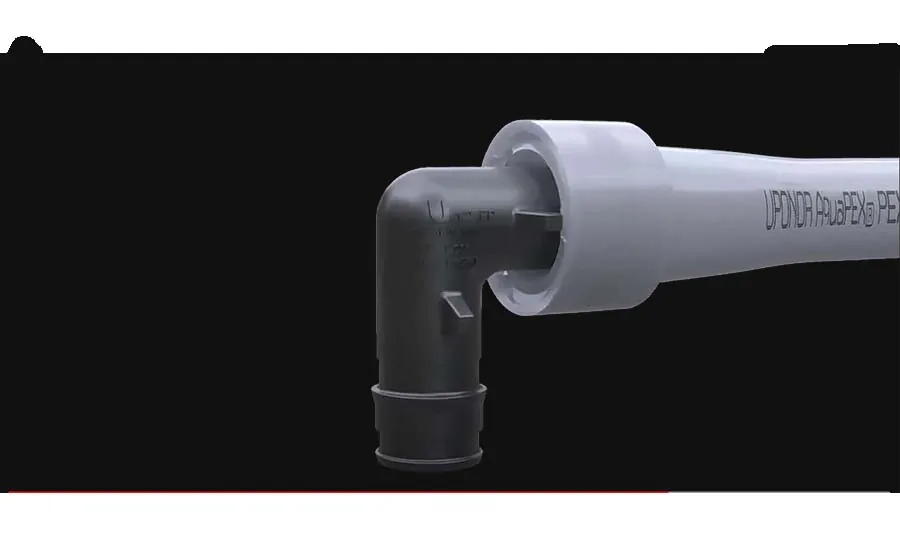
On a whole-house repipe in Lake Forest, whether in the Lake Forest Keys, Foothill Ranch or Portola Hills, we use PEX-A with cold-expansion fittings (ASTM F1960). The pipe end is expanded, slipped over the fitting and shrinks back to form a seal on the pipe itself, with no O-ring in the waterway. It is the method we trust for joints that will be closed inside walls for decades. If we find push fittings during a repipe, we replace them as part of the job.
Should you replace the ones you have?
If a push fitting is visible, dry and was installed carefully, it can stay while you plan. If it is inside a wall, ceiling or crawl space, or you do not know who installed it, it is worth upgrading the next time the area is open. Lake Forest requires permits for repipes and most plumbing alterations, and the inspector will look at every concealed joint.
Related reading
See how a full PEX repipe is planned, and if a remodel is coming, read our guide to bathroom remodel plumbing. Neighbors can visit Irvine, Mission Viejo and Rancho Santa Margarita, or see the full map at repipeinc.com.
Not sure what is behind your walls?
We will inspect your fittings and give you an honest read on what should stay and what should go. Get my free quote. Our AI system alerts a technician instantly, so you get a fast callback.
Repipe OC, 23821 Hillhurst Drive, Laguna Niguel, CA 92677, (949) 524-2362, CSLB #1087885 C-36.
Repipe OC near you
Not in Lake Forest? The same crew serves nearby cities. See every city we serve, or jump to a neighboring city:
 Written by Repipe OC · CSLB #1087885 C-36 · 23821 Hillhurst Drive, Laguna Niguel, CA 92677 · (949) 524-2362